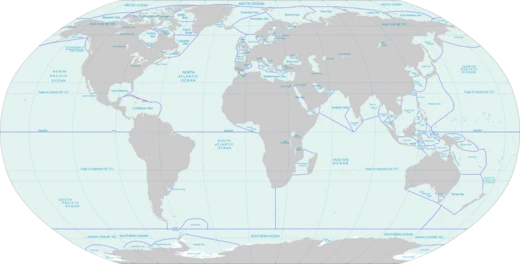
Sea of Azov
Shallowest sea, key route, site of ancient and modern conflicts.

Wikipedia / Wikimedia Commons
The Sea of Azov is an inland shelf sea in Eastern Europe, connected to the Black Sea by the narrow Strait of Kerch. As the shallowest sea in the world, it is an important access route for Central Asia via the Volga–Don Canal and has been a site of historical military conflicts and economic activity.
- minimum_depth
- 0.5 metres (1.6 ft)
Lore & Background
The Sea of Azov has been known by many names throughout history. In antiquity, it was called the Maeotis Swamp, Lake Maeotis, or the Cimmerian Swamps, reflecting its marshy nature and the ancient peoples living nearby. The Maeotians themselves called it Temarunda, meaning 'Mother of Waters'. Medieval Russians knew it as the Sea of Surozh, and the Ottoman Turks called it Balük-Denis, or 'Fish Sea', due to its high productivity. The first campaign failed, but the second succeeded in capturing the fortress of Azov.
Reader's Guide
The Sea of Azov holds significance as a strategic waterway and a resource-rich body of water. Its shallow depth and river inflows create a unique ecosystem with low salinity and high biomass, supporting abundant plankton and fish, which has historically made it a vital fishing ground. The sea's connection to the Black Sea via the Strait of Kerch and to the Caspian Sea via the Volga–Don Canal makes it a crucial transport route for Central Asia. Historically, the sea has been a focal point for imperial ambitions, from the Bosporan Kingdom in antiquity to Russian and Ottoman conflicts in the 17th and 18th centuries. The sea's shores and spits, rich in vegetation and bird colonies, also contribute to its ecological value. Its legacy is one of contested control, economic utility, and environmental uniqueness.
Did You Know?
- The Sea of Azov is the shallowest sea in the world, with depths varying between 0.5 and 14 metres.
Frequently Asked Questions
Who is Sea of Azov?
Sea of Azov is an inland shelf sea in Eastern Europe bordered by Russia to the east and Ukraine to the northwest and southwest. It connects to the Black Sea via the narrow Strait of Kerch and holds the record as the shallowest sea on the planet.
What are Sea of Azov's powers/role?
Its most defining trait is extreme shallowness, with a minimum depth of only 0.5 metres, which sets it apart from every other sea in the series. It also functions as a key waterway, linking Central Asian regions to the Black Sea through the Volga–Don Canal.
Why is Sea of Azov important?
As the world's shallowest sea and a critical trade corridor connecting the Volga and Don river systems to the Black Sea, it has been a focal point of economic and military activity for thousands of years. Its strategic chokepoint position makes it disproportionately influential relative to its small size.
What is Sea of Azov's relationship with the Black Sea?
The two bodies of water are joined by the Strait of Kerch, a narrow passage that lets vessels move between them. This link gives Sea of Azov its gateway role, channeling traffic from the wider Black Sea basin into the shallower, more enclosed Azov basin.
More in Seas And Oceans 25-39
Elsewhere in the Seas And Oceans universe
Spotted an error? Know more?
This is a living reference — every entry is fact-audited, and reader corrections feed straight into our audit queue. Suggest an edit · See this site's audit record